Christian

The Seven Churches (Part 4) – The letter to Pergamum


re-post
Pergamum was a prominent religious centered city that was north of Smyrna. Within it were multiple religions and cults that worship various gods that were known throughout the known world at that time. Here a small group had come together in all honesty to worship Christ. This letter from Jesus is His message to them.

Revelation 2:12 – And to the angel of the church in Pergamum write: “The words of Him who has the sharp two-edged sword.”

CHRIST THE JUDGE: The sharp two-edged sword refers to the Word of God. As stated in Dr. Walvoord’s commentary on the book Revelation: “Its representation as a double-edged sword indicates on the one hand the way God’s Word, by its promise and message of salvation, cuts loose the chains of sin and condemnation that bind the helpless sinner. On the other hand, the same Word is the means of condemnation and refection of those who refuse the message of grace. The Word of God is both the instrument of salvation and the instrument of death.”

Revelation 2:13 – “I know where you dwell, where Satan’s throne is. Yet you hold fast my name, and you did not deny my faith even in the days of Antipas my faithful witness, who was killed among you, where Satan dwells.”

COMMENDATION: Jesus gives them praise for continuing to exist in as He Himself states “where Satan dwells.” He also mentions a man named Antipas who had been martyred. Nothing is known of him save that he died for Christ who called him His “faithful witness.” Those there tried to stay faithful to His name.
Now there are those that believe that the gods in all the ancient Polytheistic cultures were none other than the fallen angels which included their leader Satan. When you actual think upon it there is some credence to this being true. So Jesus making the statement that this is “where Satan’s throne is” could actually pertain to a temple of Zeus which was one of the gods worshiped here since most times Statues of him showed him seated upon a throne.

Revelation 2:14-15 – “But I have a few things against you: you have some there who hold the teachings of Balaam, who taught Balak to put a stumbling block before the sons of Israel, so that they might eat food sacrificed to idols and practice sexual immorality. So also you have some who hold the teachings of the Nicolaitans”

Here is the last time the “Nicolaitans” are mentioned and again no detail is given and so their acts fall into the darkness of history only to ever be seen again upon the day of the Great White Throne Judgment when their membership will stand exposed before God as He passes judgment upon them.
Also mentioned thou is the false prophet Balaam found in Numbers 22-25. In Numbers 31 we find that he had advised King Balak to corrupt Israel by tempting them to intermarry with pagan women and begin worshiping their wife’s gods in acts which included eating sacrificed food and precipitating various sexual immoralities. Some within the church had fallen prey to these practices. The same is true today for those churches that have embraced and welcomed homosexuality into their churches.
This same mentality is the mentality that embraced the church as a whole soon after Constantine allow them to worship God freely and openly. Shortly after attempts to bring into it the use of pagan rituals which entered the church and began to defile the structure of the church. This is also per Dr. Walvoord where the beginning elements of Catholicism began to take hold with the church adding rituals which were never given to the church by Christ.

Revelation 2:16 – “Therefore repent. If not, I will come to you soon and war against them with the sword of my mouth.”

Again I turn directly to the words of Dr. Walvoord: “In this abrupt command, Christ issued a sharp word to the church at Pergamum – and their modern counterparts. Even though many in the church at Pergamum had been faithful and one of their number had dies as a martyr, it was still true that the church was being invaded by an evil so serious that Christ warned He would fight against it. There is no alternative to continued impurity and compromise with the truth but divine judgment. The apostasy that is seen in it early stage in the church at Pergamum has its culmination in the still-future apostate church in Revelation 17, which is ultimately brought into divine judgement by Christ, the Head of the church.”

Revelation 2:17 – “He who has an ear, let him hear what the Spirit says to the churches. To the one who conquers I will give some of the hidden manna, and I will give him a white stone, with a new name written on the stone that no one knows except the one who received it.”

Again there is the exhorting for those that can hear to hear, for not all will. For those that do hear and overcome the sins listed against the church of Pergamum they are promised not only a special mana that is hidden to the world, but they are to receive a white stone on which a name only known to the Trinity and those that are given this stone.

The Seven Churches (Part 3) – The letter to Smyrna


re-post
The city of Smyrna was about thirty-five miles north of Ephesus. It too was a wealthy city, second only to the afore mentioned city south of it. Today though Smyrna still exists yet under a new name. It is the third largest city in Turkey and is called Izmir. It was a commercial center at that the end of the first century since it had a good harbor.

Revelation 2:8 – and to the angel of the church in Smyrna write: “The words of the first and the last, who died and came to life.”

CHRIST THE ETERNAL ONE. When the Glorified Christ called Himself “the first and the last” He identified Himself with God, who in the first chapter of Revelation was referred to as “the Alpha and the Omega.” This statement showed that not only was He the Son of God, but was as well God even though He has taken human form as is denoted in the next part of the salutation. He was the one “who died and came to life.” This shows that even though He took human form He has always been and always will exist since he rose from the dead upon the third day.
By Him dying and rising also shows God’s love for all, by the fact that Christ came down and suffered for our sins and became our replacement for the death we all so deserve. However, He rose from the dead as we are promised to stand alive before His Father the Lord God, clean and unblemished by the sacrifice of His blood.

Revelation 2:9 – “I know your tribulation and your poverty (but you are rich) and the lander of those who say that they are Jews and are not, but are a synagogue of Satan”

Those that followed Christ in the city of Smyrna were under persecution. To the point that they had been denied the ability to possible work within the city making them destitute. They most likely resorted to menial tasks to get by and survived, but still stayed loyal to their belief in God and His Son the Lord Jesus Christ.
Amongst those that were against them were those that were once of Jacob, but had abandoned their belief in God to a belief in the world and all that includes and so they embraced their new master Satan.

Revelation 2:10-11 – “Do not fear what you are about to suffer. Behold, the devil is about to throw some of you into prison, that you may be tested, and for ten days you will have tribulation. Be faithful unto death, and I will give you the crown of life. He who has an ear, let him hear what the Spirit says to the churches. The one who conquers will not be hurt by the second death.”

This persecution they were experiencing was only the beginning of their trials. They would strife and hold onto their faith and become strong in their belief that God and His Son are both real.
It is recorded that approximately sixty years later the bishop of Smyrna named Polycarp was burned alive on a Saturday, for the historian and commentator Ryrie states that the wood gathered was in part was provided by the fallen away Jews that gathered this wood on the Sabbath.
Even though under persecution Jesus exhorts them to stand fast to their faith and belief in Him. For by doing so even though it may last their entire life upon this planet it is remember that this life here is like the blink of an eye to what the rest of our true life will be like in length. For Jesus promise them the “crown of life” another reference to eternal life. All life that will last billions of years.
The persecution the church as a whole was also in the process as it was for those at Smyrna. It continued until Constantine granted Christians the freedom of worshiping within the Rome Empire in the early part of the fourth century.

The Seven Churches (Part 2) – The letter to Ephesus


re-post
The letters to the churches begins in chapter 2 of the book of Revelation. Now to understand the letters we must understand the cities themselves and the time period. The book of Revelation was written in the last decade of the first century A.D. Sixty years after Jesus walked upon the earth. John is an old man now and exiled to the isle of Patmos by the Roman Emperor Domitian. Most that has actually seen Christ are old like John or have gone on to be with Christ if they called Him their Savior.
Ephesus at the end of the first century was the most prominent city in Asia Minor. In fact all seven of these cities, either ruins or still standing in some form, are found within the boundaries of Turkey.
Of the seven churches Ephesus is the only one of the seven churches mentioned in the book of Acts, as well as having a letter sent to them that become a part of the Bible, the book of Ephesians. Evidence supports that pastor at large for Ephesus was Timothy of first and second Timothy, but as mentioned before most that actually had walked or met Christ were gone now.
The state of the church in the 90s A.D. were the next generation of people that chose to become Christian. Most were raised from birth on the tales and stories of the miracle worker know as Jesus Christ that rose from the dead, but they had never actually seen Him.

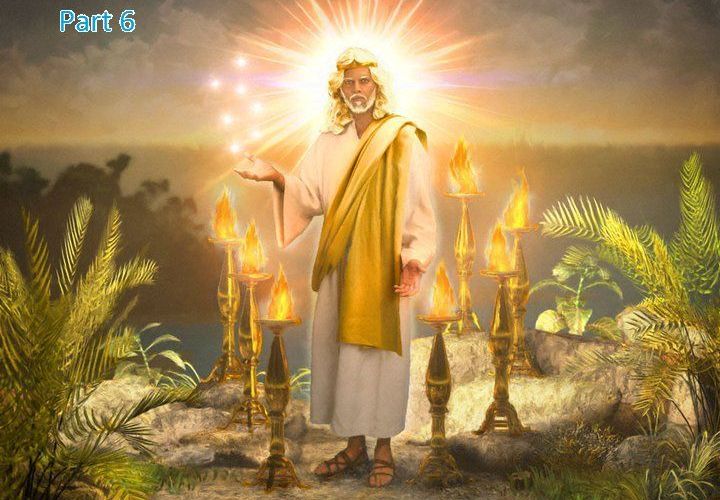
Revelation 2:1 – To the angel of the church in Ephesus write: “The words of Him who holds the seven stars in His right hand, who walks among the seven golden lampstands.”

CHRIST THE SOVEREIGN JUDGE: The Glorified Christ is shown here to be holding the seven stars or angels of the seven churches, as well as He walks amongst the seven golden lampstands which are the churches themselves. This to me means Christ Himself has toured the churches first hand and is fully prepared to comment upon their state and what He thinks needs to be done in each to correct any issues that are found. The holding of the stars means that not only that He has authority over the churches, but they are in fact sanctioned to exist under His blessing. So those within it have stated they wish to be a child of Christ and have bowed before Him and asked Him into their lives.

Revelation 2:2-3 – “I know your works, your toil and your patient endurance, and how you cannot bear with those who are evil, but have tested those who call themselves apostles and are not, and found them to be false. I know you are enduring patiently and bearing up for my name’s sake, and you have not grown weary.

COMMENDATION: Christ has seen that those in Ephesus have been diligent in their faith and have even tested those that paraded themselves to be messengers of Christ, but were found to be false. So here Jesus finds things happening within this church that please Him and so it states has such.

Revelation 2:4-5 – “But I have this against you, that you have abandoned the love you had at first. Remember therefore from where you have fallen; repent, and do the works you did at first. If not, I will come to you and remove your lampstand from its place, unless you repent.”

INDICTMENT: The word “love” used here is “Agapen” is the deepest most meaningful type of love and because they have fallen from this first love they were seen by Christ Himself as of having a major problem because he used the word “repent” meaning to turn around, do a 180.
When Christ walked amongst us He added two commandments to the ten we already had. The first and most important of these was to Love God with all our heart, mind and soul. To love God with the human trinity to show love to the Holy Trinity. To love God though His the Son the Lord Jesus Christ so completely means we are to place God first and foremost in all that we do. Every single action that we do must be done thinking of: “How would Jesus do this?” “How would God want me to do this?” Every single action we do in our lives and every single day of our lives.
These were teaches that this church knew for the gospels had been in their possession at this time, and they had heard these very words spoken of from within them.
This re-emphasizes just how important it is to live like an image of Christ 365 days a year not just on Sunday or when it is convenient. For Christ Himself says to “repent” for they had strayed away from their love for Christ. Their hearts had cooled for God and thus opened the door for a falling away and due to this falling away Jesus threatened to remove their lampstand. The lampstand was removed in 431 when the last inhabitants of Ephesus were forcibly removed by the Turks.

Revelation 2:6 – “Yet this you have: you hate the works of the Nicolaitans, which I also hate.”

Who the “Nicolaitans” were no one knows. The mere fact that any true history of them has ceased to exist shows just how much Jesus Christ despised them, for all we have left of them is a meager mention of their name twice in this book and both times it is not in a flattering light.

Revelation 2:7 – “He who has an ear, let him hear what the Spirit says to the churches. To the one who conquers I will grant at eat of the tree of life, which is in the paradise of God.”

Here we see that not all will hear the words and understand them and that this message is given through the Holy Spirit. Those that do hear and overcome are promised to eat of the “tree of life,” in other word granted eternal life in the service of God.
Here we see how as a church as a whole at the end of the first century was starting to drift away from Christ. For they had not seen Him. They did not know Him as a person, but a tale told to them by their elders. This is true now as well in many. They see God and Jesus as a story, a fairy tale. Not realizing Jesus was real and there is evidence that still exists that say yes Jesus is real and what He did was real as will and what He offers to all is just as real.

The Seven Churches (Part 1)


re-post
This last week I started restudying the book of Revelation. To do this I decided this time as I did with the Book of Daniel to use a commentary to gain a better insight into the word of God. Now I have tried more than one and found only one to be really of any true worth.
The Walvoord Commentary series is what I would recommend. In most areas with them I have had little conflict with what was represented. I did find that Dr. John F. Walvoord, or the editors, since he has gone on to be with Christ, that he is anti-Catholic, but he gives a good argument for this in one of the churches to be discussed. I also found him to be pro-Baptist, which I actually feel is not a good thing. He had the belief of “once saved always saved.” This, I personally believe, has become an open door to apathy thus helping to create the state of the falling away from God we are now experiencing in Christianity today.
Now it is important to get a grasp upon the most important element within the Bible, especially the New Testament. It was written for those that have already become true followers of Jesus Christ. It is for those that have fallen to their knees and bowed before Him and asked Him into their hearts. It is a guide book into striving to become a true reflection of our Savior. So when John is writing these letters to the seven churches it is to those that committed within their hearts to truly be Christian. Now most in this world say they are Christian, because they have gone to church when they were young in most cases, but they never truly surrender their lives to following the Son of God. This is apathy, this is a sin. This is why people have such a hard time understanding the Bible, let alone striving to follow it teachings. They think they are Christian, but in reality they aren’t. This has occurred not only due to Catholicism, but also due to Baptist teaching, both of which are man-made doctrines and not given by God through His Son the Lord Jesus Christ.
Jesus gave us the true baptism which occurs after you commit your heart and soul to Christ, something that is impossible for a baby to do. Christ gave us the taking of unleavened bread a simple of His body and of wine the symbol of His blood. These are the only ceremonies given to the Church. He also taught that those that have been saved can fall away from their salvation due to freewill. Christ Himself made this clear in John 15. It is reinforced in 2 Peter 2 as well as in two of the letters going to be discussed in this series. For these letters were given to the “messengers” of the seven churches and so as Christ says at the end to every church “He that hath an ear, let him hear…”
Here is an important element that the Walvoord Commentary brought to light to me that when thought upon actually makes sense. The state of the churches even though contemporary for they can exist as contemporaries in other churches that now exist. However, this is what I found enlightening is that the state of the churches are also linear. Meaning they follow one after the other throughout the church age. The first church being the church at the time the letters are written to the last church being the state of the church as a whole is at the time when it is near the end of times or the time for what is stated within Revelation to actually take place.

Blog post for podcast #4


intro
Hello this is Dreamwalker1960
Before I begin today’s lesson I have to say that I messed up a fact in the previous podcast. I had states that Jesus talked to His disciples after His crucifixion in John 15, this was incorrect. It was before. It doesn’t take away from the lesson, it just shows I am human.
To start I will refresh you of the previous two broadcast. In the first we established that the “lukewarm” were people that had received the grace from God and thus salvation. Yet they turned their backs upon Jesus to listen to watered down teachings of the Gospel.
Then in the last broadcast. We showed that Jesus Christ is the vine and you can only be a part of the vine if you had salvation. Yet if they did not bear fruit they were removed from the vine and given over willingly unto the fire, because they found the world more entertaining.
Today we expand upon what we found out in our study of John 15 last time.
Today we will look into Matthew 7 where Jesus explains on how to identify false prophets and as to who may enter into heaven. But why here. Because here we have another fruit bearing example much like John 15 but with direct bearing upon why fruit is born or not born. Now even though the verses in question goes from verse 15-23 we will overlook some of them for the sake of time and hit upon the important ones for our discussion. However I will list all nine of them for the sake of context.
Matthew 7: 15 “Beware of false prophets who come disguised as harmless sheep but are really vicious wolves. 16 You can identify them by their fruit, that is, by the way they act. Can you pick grapes from thornbushes, or figs from thistles? 17 A good tree produces good fruit, and a bad tree produces bad fruit. 18 A good tree can’t produce bad fruit, and a bad tree can’t produce good fruit. 19 So every tree that does not produce good fruit is chopped down and thrown into the fire. 20 Yes, just as you can identify a tree by its fruit, so you can identify people by their actions.
21 “Not everyone who calls out to me, ‘Lord! Lord!’ will enter the Kingdom of Heaven. Only those who actually do the will of my Father in heaven will enter. 22 On judgment day many will say to me, ‘Lord! Lord! We prophesied in your name and cast out demons in your name and performed many miracles in your name.’ 23 But I will reply, ‘I never knew you. Get away from me, you who break God’s laws.’
The breakdown
We look more closely beginning with verses 17 and 18. So here they are in the KJV
17 – Even so every good tree bringeth forth good fruit; but a corrupt tree bringeth forth evil fruit.
18 – A good tree cannot bring forth evil fruit, neither can a corrupt tree bring forth good fruit.
Bringeth; bring forth – G4160 – poieo – to make or do [Strong’s]
Evil – G4190 – poneros – hurtful, i.e. evil (in effect or influence) [Strong’s]
“’poneros’ is used in {this verse} to denote ‘unserviceable’ or ‘useless’ fruit as distinct from the ‘karpos kalos’ of the good tree.” [TDNT]
a: unserviceable – not suitable to be used [Collins Dictionary]
A corrupt; can a corrupt – G4550 – sapros – rotten, i.e. worthless [Strong’s]
Good – G2570 – (which is different from the “good” at the beginning of this verse) – kalos – good i.e. valuable or virtuous
My translation of verse 18 – A good tree cannot bear useless fruit, neither can a rotten tree bear valuable fruit.
Verse 19 (KJV) – Every tree that bringeth not forth good fruit is hewn down, and cast into the fire.
Is hewn down – G1581 – ekkopto – to exscind; to frustrate [Strong’s]
a: exscind – to cut out or off [dictionary.com]
“Hewing down is a symbol of the complete separation of a man from life” [TDNT]
Cast – G906 – ballo – to throw (in various applications, more or less violent or intense) [Strong’s]
The fire – G4442 – pyr – pur – fire [Strong’s]
A judgement [TDNT]
Now we will move on to verse 22 in the KJV
Many will say to me in that day, Lord, Lord, have we not prophesied in thy name? and in thy name have cast out devils? and in thy name done many wonderful works?
Prophesied – G4395 – to foretell events, divine, speak under inspiration, exercise the prophetic office [Strong’s]
Have cast out – G1544 – ekballo – to eject [Strong’s]
Devils – G1140 – daimonion – a demonic being [Strong’s]
Wonderful works – G1411 – dynamis; dunamis – force, specifically miraculous power (usually by implication a miracle itself) {[Strong’s]
The insinuation of this verse when taken in context with verse 21; (Not everyone that saith unto me, Lord, Lord, shall enter into the kingdom of heaven; but he that doeth the will of my Father which is in heaven. {KJV}).
Is that these are people are standing before the Great White Throne on that day of judgement that will occur after the thousand year reign of Jesus Christ. (Revelation 20:11- 15)
Now as was established in verses 17 and 18 only someone who is good or saved can give prophecy, cast out demons and do true miracles. This supports what we covered in the last podcast of John 15. These people were once saved and given grace through their salvation in and from Jesus Christ as was shown in Galatians 1.
Verse 23 – And then will I profess unto them, I never knew you: depart from me, ye that work iniquity.
Will I profess – G3670 – homologeo – to assent, i.e. covenant, acknowledge [Strong’s]
In the TDNT it continues into a deeper breakdown – to promise, to admit, to concede, to make a statement, to bear witness. It goes on to say Jesus used this wording as a form of excommunication.
a: excommunication – excluded from the rights of church membership [Merriam-Webster Dictionary]
To be excommunicated you have to be a part of the church in the first place. I must also state here that Jesus’ use of this wording is a type of Jewish legalese used when some type of judgement is taking place.
Iniquity – G458 – anomia – illegality, i.e. violation of law or wickedness [Strong’s]
In the TDNT it is note as:
…. The word “nomos” (G3551) give two shades of meaning to “anomia.” The reference is either a. to a fact, “there is or was no law,” “without a (the) law,” or b. the word means “against the (a) law,” with an implied judgement since it is assumed that there is in fact a binding law.
This supports that this verse is a type of legalistic statement. So Christ is distancing Himself from those He had once welcomed unto the vine. Yet now, since they chose the world over salvation. He is placing as much distant between Himself and them by using such an extreme stance. Due to free will every human being has a choice in how they wish to live their lives. God and His Son our Savior truly and completely desire to have us in the vine of Christ. Yet it is we who decide how we will or will not bear fruit. It is we humans that have the most important part in this relationship with God through His Son our Savior. Yet millions of people willingly choose not to bear fruit.
So the implication is that Jesus is stating here that He will stand as a witness testifying that these people who were once counted as member within the Church of Jesus Christ and have been removed due to their willful breaking of the laws given within the Bible and choosing to live willingly in the world, instead of with God who had bestowed the grace upon them through the sacrifice of Jesus Christ upon the cross.
Summary
So here I have given further foundation that those that are the lukewarm are those that have accepted Jesus Christ as their Savior. I have also shown that the evidence of this is that they did or do great works for Jesus Christ. They have done miracles and even cast out demons. All of which cannot be done unless Jesus Christ is with them as was established not only in verse 17 and 18, but also John 15:5-11.
Then somewhere along the lines they turned away from the teachings of the Bible which is our laws we are to follow, and so they are cut off from the Holy Vine that is Jesus Christ since they choose to no longer bear fruit. And as is shown in verse 19, as well as in John 15:6 are willingly cast into the fire.
So everyone should think about where they are with their life with God. Are they praying constantly? Are they obeying the laws of the land that do not go against the Bible? Like for example following the speed limit. Are they studying the Bible, not just reading it but going deep into the word as I have been doing with these broadcasts? This is what we all have been asked to do. God loves everyone and seeks to have all with Him. But due to the free will He has given all of us. He knows many will choose to be their own god. Seek out Jesus and ask for His help. He will help those that only ask and pray for it.
To see a detailed breakdown of this please go to dreamwalker1960.com
I hope this helps those listening to come to understand.
God Bless

Blog for podcast #3


Intro

((Due to an error on my part. I state this ((teaching to His disciples was after His ((crucifixion. This is not accurate. It was ((before. However it does not take away from ((the message. It just sbows I am only human.

Welcome to today’s podcast. I am Dreamwalker1960.
Due to some feedback announcing the Strong’s reference numbers was confusing folks so I will still have them but they can be seen in my blog dreamwalker1960.com
Today we expand upon who is a lukewarm in John 15.
John 15:1 “I am the true grapevine, and my Father is the gardener. 2 He cuts off every branch of mine that doesn’t produce fruit, and he prunes the branches that do bear fruit so they will produce even more. 3 You have already been pruned and purified by the message I have given you. 4 Remain in me, and I will remain in you. For a branch cannot produce fruit if it is severed from the vine, and you cannot be fruitful unless you remain in me.
5“Yes, I am the vine; you are the branches. Those who remain in me, and I in them, will produce much fruit. For apart from me you can do nothing. 6 Anyone who does not remain in me is thrown away like a useless branch and withers. Such branches are gathered into a pile to be burned. 7 But if you remain in me and my words remain in you, you may ask for anything you want, and it will be granted! 8 When you produce much fruit, you are my true disciples. This brings great glory to my Father.

The breakdown
Verse 1: I am the true vine, and my Father is the husbandman. (KJV)
I – G1473 – ego – a primary pronoun of the first person. I (only expressed when emphatic.) [Strong’s Expanded Exhaustive Concordance of the Bible, 2010] {Strong’s}
a – emphatic – done or said in a strong way and without any doubt [Cambridge Dictionary] {CD}
Here is where we need to go deeper though. For John, especially when quoting Jesus, there is a more profound and powerful imagery that comes out. With the simple word “I” Jesus shows His resurrected form. In these teachings that are given they do not follow the normal syntax. They reach to a new level like saying: “He is light. But He is the true and proper light which alone deserves this name.” [Theological Dictionary of the New Testament] {TDNT}
The true – G228 – alethinos – truthful – “true” which denotes the sense of real, ideal, genuine. [Strong’s]
In this deep look we see here Jesus saying “the true” He is not just speaking of “true” or “genuine.” He is actually saying “divine.” [TDNT]
a – divine – connected with a god or like a god. [CD]
Just in these four words (“I am the vine”) Jesus is showing that He is the true and divine vine, and no other can come to God except through being a branch upon His vine.
Father – G3962 – pater – a nourisher, protector, upholder; of the nearest ancestor. [Strong’s]
In the deeper study within TDNT it is showing us the “harmony of the Father and the Son.” Of the two working together for the good of those that are on the vine which is Jesus. {book V p. 999 – 1001}
The husbandman – G1092 – georgos – a land-worker, i.e. farmer, a vinedresser [Strong’s]
a – vinedresser – a person who cultivates and prunes grapevines [Dictionary.com]
Verse 2 – Every branch in me that beareth not fruit he taketh away: and every branch that beareth fruit, he purgeth it, that it may bring forth more fruit. (KJV)
Every – G3956 – pas- all things [Strong’s]
To quote the TDNT:
“The uniqueness of the NT view is that here all ideas of totality relate to a specific history of creation and salvation. As compared with the OT, the NT is distinguished especially by a richer soteriology.”
Soteriology – theology dealing with salvation as effected by Jesus Christ.
Branch – G2814 – klema – a limb or shoot [Strong’s]
a – shoot – the first part of a plant to appear above the ground as it develops from a seed, or any new growth on an already existing plant [CD]
b – limb – a large branch of a tree [CD]
Shoot, young twig, branch, shoot of the vine [TDNT]
So this means “Every branch both young and old upon the vine which is Jesus Christ,” as the next words state.
In – G1722 – en
“The ‘en’ of Fellowship in John. Exclusively in John’s Gospel and 1 John. We have a distinctive ‘en’ of religious fellowship.” [TDNT]
Meaning a free will relationship between the branch (humanity), the Vine (Jesus Christ), and the Vinedresser (God).
Beareth – G5342 – phero – bear, bring forth [Strong’s]
Fruit – G2590 – karpos – of works or deeds [Strong’s]
“This power is fellowship with Christ.” [TDNT]
a – fellowship – a friendly feeling that exists between people who have a shared interest or are doing something as a group [CD]
He taketh away – G172 – airo – to take up or away; to take away what is attached to anything, to remove [Strong’s]
It is here that we come to an issue. In the many commentaries I read they go with the definition of “lift up,” which doesn’t make any sense. It doesn’t even flow with the words of the Bible itself. When they translated the Bible to English in the early 1600s and then finalized it in 1611 they agreed upon the wording “he taketh away,” not “he lifteth up.” Those that made these commentaries made it sound as if they were lifting up to God those committing sin. This is contrary to the teachings within the Bible. We do not raise up the sin, we raise up ourselves to the altar seeking the removal of sin. Jesus Himself knew that this day would occur. So he repeats Himself in verse six and clarifies His meaning with more detail, which we will get to later. If their intent to say that the unfruitful are seeking forgiveness and wish to receive forgiveness and then to try to bear fruit. There can be some merit to that. However Jesus made Himself clear on this matter elsewhere in the Bible as well.
Revelation 3:15 “I know all the things you do, that you are neither hot nor cold. I wish that you were one or the other! 16 But since you are like lukewarm water, neither hot nor cold, I will spit you out of my mouth!”
In John, Jesus states that God Himself will remove the branch that does not bear fruit. Not all branches that do not bear fruit laying upon the ground, but are a part of the vine itself.
Here in Revelation the Glorified Christ is making it clear that he will spit those out that are lukewarm. Using Christ’s words in John those that bear fruit would compare to those that are hot in the Revelation. So those that are cold in Revelation equates to those that deny Jesus altogether and live in sin. So that would mean that those that are lukewarm would be those that acknowledge Jesus Christ as their Savior and so are a branch upon the vine, or were attached to the vine that is Jesus Christ. However, they bear no fruit and so are living in sin. So God takes them away in John and Christ spits them out in Revelation. Thus removing them from His fellowship cutting them from the vine. For very few fall upon the ground. Most stay on the vine unless they are cut off from it.
He purgeth – G2508 – kathairo – to cleanse, to prune, to expiate – purge
a – cleanse – to make something completely clean
b – expiate – to show that you are sorry for bad behavior by doing something or accepting punishment
c – purge – to make someone or something free of something evil or harmful.
That – G2443 – hina – in order that [Strong’s]
More – G4119 – pleion – more in quality, number or quality [Strong’s]
Verse 3 – Now ye are clean through the word which I have spoken unto you.
Now – G2235 – ede – at (or by) this time [Strong’s]
Ye – G5210 – hymeis – yourself, you [Strong’s]
Clean – G2513 – katharos – free from impure admixture, without blemish, spotless [Strong’s]
“In both John and 1 John the question of the full purity of Christians is discussed. It is affirmed absolutely in theory in John 15:3.” [TDNT]
Through – G1223 – dia – denoting the channel of an act [Strong’s]
The word – G3056 -logos – the teachings of Jesus to the disciples that eventually became the gospels.
“But the person who receives and keeps” the teachings of Christ (the word) is now clean [TDNT in quotations]
I have spoken – G2980 – laleo – the use of this word was to show that Jesus was like a parent talking to His children, at that point the disciples. But in turn to us at went on to the present.
Verse 4 – Abide in me, and I in you. As the branch cannot bear fruit of itself, except it abide in the vine; no more can ye, except ye abide in me. (KJV)
Abide – G3306 – meno – remain, dwell, continue [Strong’s]
“…… God abides in Christ. Believers abide in Christ, and Christ in them. God abides in believers, and believers in God. The eschatological promise of salvation becomes immediate possession in virtue of this statement in the present tense.” [TDNT book IV pg. 576]
Cannot – ou(G3756), dynamai(G1410)
a: ou – also [Strong’s]
b: dynamai – to be able or possible, can, cannot, to be able to have power [Strong’s]
Bear – G5342 – phero – to bear, carry, being moved, borne along [Strong’s]
“The term has the special sense of bearing fruit…… the vine with branches that bear fruit.” [TDNT]
Of – G575 – apo – off, away (from something near) [Strong’s]
Except – G3362 – ean me – unless, except [Strong’s]
It abide – G3306 – meno – to stay (in a given place, state, relation or expectancy) [Strong’s] See meno above for TDNT
No more – oude(G3761), houto(G3779)
a: oude – nor however, neither, nor, not even
b: houto – in this way
Verse 5 – I am the vine, ye are the branches: He that abideth in me, and I in him, the same bringeth forth much fruit: for without me ye can do nothing. (KJV)
And I – G2504 – kago – from kai and ego: likewise me
Much – G4183 – polys – much, many, great, abundant
Without – G5565 – choris – separately or apart from [Strong’s]
Me – G1700 – emou – of me, mine, my [Strong’s]
Do – G4160 – poieo – to make or do [Strong’s]
The use of this word “poieo” had it usage done primarily to the actions, works and miracles of Jesus Christ. [TDNT] The use here stating that only with Jesus in and with you can you do holy works.
Nothing – ou(G3756), oudeis(G3762)
a: oudeis – not even one, none, nobody, nothing [Strong’s]
“…for without me ye can do nothing.” Without having Jesus within you. You cannot bear fruit.
verse 6 – If a man abide not in me, he is cast forth as a branch, and is withered; and men gather them, and cast them into the fire, and they are burned. (KJV)
A man – G5100 – tis – some or any person or object [Strong’s]
Me – G1698 – emoi – to me [Strong’s]
He is cast – G906 – ballo – to throw [Strong’s]
“To throw” or “to cast,” “to cast off fruit. ‘Often in the NT “ballo” is used in different ways in connection with the thought of judgement, partly as a committal to the element which exercises it. Partly of expulsion from the community of salvation, when used with “exo.” [TDNT]
Forth – G1854 – exo – out [Strong’s]
As – G5613 – hos – in that manner [Strong’s]
And – G2532 – kai – and, also, even, so, then, too. [Strong’s]
Is withered – G3583 – xeraino – to desiccate, to shrivel [Strong’s]
Men gather – G4863 – synago – sunago – to lead together, collect or convene, to entertain [Strong’s]
Them into – G1519 -eis – to or into [Strong’s]
The fire – G4442 – pyr – pur – fire [Strong’s]
A judgement [TDNT]
They are burned – G2545 – kaio – to set on fire, consume [Strong’s]
With the TDNT the emphasis of this word is keyed to self-burning. Voluntarily giving oneself over to be burned.
The main takeaways from the translation of this verse is if you accept Christ as your Savior and you choose not to follow his teaching and live a truly Christian life. You instead choose to live in the world of man which entertains you. You are broken off from the Divine Vine that is Christ and you are cast willingly into the fires of judgement. Which agrees with Revelation 3:15-16.
This also shows that we must actively and with full knowledge follow the teachings within the Bible and if it is called a sin in the Bible and we are told not to live in this fashion. Then that is what we MUST do as our part of this relationship with Jesus Christ. It is not a one-sided relationship. We have an active part within it, which we need to do or we voluntary to lose our salvation and to be removed from Jesus and His Heavenly Father. This is verified in the next verse.
Verse 7 – If ye abide in me, and my words abide in you, ye shall ask what ye will, and it shall be done unto you. (KJV)
Verse 8 – Herein is my Father glorified, that ye bear much fruit; so shall ye be my disciples. (KJV)
Herein – en(G1722), touto(G5129)
a: touto – to (in, with, or by) this (person or thing) [Strong’s]
Glorified – G1392 – doxazo – to render (or esteem) glorious [Strong’s]
Shall ye be – G1096 – ginomai – to cause to be, to become [Strong’s]
Disciples – G3701 – mathetes – a learner [Strong’s]
Summary
One important factor that needs to be made here. When Christ is giving this lesson to the disciples. He has been resurrected. This is after the crucifixion. So to see Jesus as the Divine Vine gives true meaning to that imagery.
He makes it clear that to be a part of Him upon this vine you are one with Him. So you are saved. So to be able to be on the vine you have had to be grafted onto the vine. Meaning to be saved. So again we see that those that are on the vine can stop bearing fruit. You can only not bear fruit when Jesus is not a part of you. If you were saved but Jesus is not a part of you then what are you? You are the lukewarm. And as seen in Revelation 3 you are seen as worse than those that that deny God altogether.
So as has been shown in this podcast and the previous one the lukewarm were a part of the body. They were saved. As can be seen here God Himself cuts these people from the vine and gives them over to humanity. And then ultimately due to these peoples own desires and intentions are cast willingly into the fires of judgement.
In my next podcast we will look at Mathew 7 to see how people are influenced to turn willingly away from Jesus and the salvation He offers unto us all.
Again go to dreamwalker1960.com to see my blog post for this podcast.
God bless

An in-depth look at 2 Timothy 3:16-17 and 2 Timothy 4:1-2


2 Timothy 3: 16 All Scripture is inspired by God and is useful to teach us what is true and to make us realize what is wrong in our lives. It corrects us when we are wrong and teaches us to do what is right. 17 God uses it to prepare and equip his people to do every good work. (NLT)
2 Timothy 4: 1 I solemnly urge you in the presence of God and Christ Jesus, who will someday judge the living and the dead when he comes to set up his Kingdom: 2 Preach the word of God. Be prepared, whether the time is favorable or not. Patiently correct, rebuke, and encourage your people with good teaching. (NLT)
This in actuality is a part of the letter that Paul wrote to Timothy that are connected. I have no understanding as to why it was divided by those that assigned chapters and verses to the Bible when this division of the Bible was created.
16 – All scripture is given by inspiration of God, and is profitable for doctrine, for reproof, for correction, for instruction in righteousness: (KJV)
All – pas – all, any, every, the whole {Strong’s concordance} [Strong’s]
Scripture – graphe – a document i.e. holy Writ (or its contents or a statement in it) [Strong’s]
From the breakdown of the word “graphe” in the Theological Dictionary of the New Testament [TDNT]. Paul’s usage of the words “All scripture” was to show the gentiles that had accepted Jesus Christ as their Savior. That all the writings of Holy Scripture which included what we now call the Old Testament were important to Christianity as well. For at that time it was not called the Old Testament, but the Tanakh.
Is given by inspiration of God – theopneustos – from theos (God) and pneo (to breathe hard); divinely breathed [Strong’s]
“It is thus evident that the author is differentiating the writings ordained by God’s authority from other, secular works.” [TDNT]
Paul when giving these instruction to Timothy, which as you go through 2 Timothy you see and understand. That there were false teachings going about in the Christian communities. Thus he was showing that when you bring the teachings of the letters which would one day become the New Testament. That when you combined these letters with the Tanakh. All would see that the true teachings of God would join together in Holy harmony. This was also showing the young Christian groups that the Tanakh was also a part of their teaching and something to embrace and to learn from. Not just the letters that were circulating throughout their communities.
Is profitable – ophelimos – helpful or serviceable, i.e. advantageous [Strong’s]
Doctrine – didaskalia – instruction (the function or the information; that which is taught) [Strong’s]
Reproof – elegcho – proof, conviction [Strong’s]
“’Proof’,’ means of proof’ with a view to convincing and refuting” [TDNT]
Correction – epanorthosis – a straightening up again [Strong’s]
“In 2 Timothy 3:16 we are told that Scripture can teach us how the believer may attain to salvation. Since Scripture originates from God’s Word, it is profitable for teaching, for the conviction of the sinner, and for instruction in righteousness. There is obviously a planned sequence in this list of nouns. If between the conviction of the sinner and his instruction in righteousness there is a reference to “epanorthosis,” this can only mean that the convicted sinner receives the restoration, i.e., the amendment in conversion {unto salvation (2 Timothy 3:15)}, which only God can give. Hence here, too, there is an eschatological determination of “epanorthosis.” Though, in accordance with the general structure of the Pastorals, we have a stronger orientation to ethical outworking.” [TDNT]
Eschatology – a branch of theology concerned with the final events in the history of the world or of humankind (Merriam-Webster Dictionary)
Instruction – paideia – education or training [Strong’s]
Righteousness – dikaiosyne, dikaiosune – equity, justification [Strong’s]
a: equity – 1) the quality of being fair or impartial; fairness; impartiality; 2) something that is fair and just [Dictionary.com]
“The concept of law exercised so strong an influence on the understanding of all social relationships that even theological reflection on the fellowship established between God and man (humanity) was decisively affected by it. One may say that law is the basis of the view of God in the OT in so far as it is proved especially by the usage of the OT. The concept of law is expressed by a series of terms which are used not merely for the relations of God to man and man to God, but also for the conduct of both God and man as determined by these relations. If vital religious relationships and interconnexions are regulated by a religious norm. It is obvious that this norm is valid for all social relationships, and therefore that law fashions the ethical norm.” [TDNT; Vol. II page 174]
“The reference here is to right conduct or a godly walk.” [TDNT; Vol. II page 210]
An important note to place here:
“World-class scholar Bruce Metzger said that compared with other ancient documents, there is an unprecedented number of New Testament manuscripts and that they can be dated extremely close to the original writings. The modern New Testament is 99.5 percent free of textual discrepancies, with no major Christian doctrines in doubt. The criteria used by the early church to determine which books should be considered authoritative have ensured that we possess the best record about Jesus.” [The Case for Christ pg, 280]
This however does not apply to the NIV Bible, which has changed or removed several important elements from the text. This Bible if used should be replaced with either the KJV or a NLT as soon as possible.

Verse 17 – That the man of God may be perfect, thoroughly furnished unto all good works. (KJV)
The man – Anthropos – man-faced i.e. a human being [Strong’s]
Of God – theos – a diety, God [Strong’s]
Perfect – artios – complete [Strong’s]
“At 2 Timothy 3:17 ‘artios’ is used in a sense to denote what is right or proper, and more particularly what is becoming to a Christian, obviously with a moral accent…..” [TDNT; Vol. I pg. 476]
Thoroughly furnished – exartizo – to finish out; to equip fully [Strong’s]
“…. ‘exartizo’ means to bring to a suitable state for Christian moral action.” [TDNT; Vol. 1 pg. 476]
Works – ergon – from a primary “ergo” (to work); toil (as an effort or occupation) act. [Strong‘s]
2 Timothy 4:1 – I charge thee therefore before God, and the Lord Jesus Christ, who shall judge the quick and the dead at his appearing and his kingdom; (KJV)
Charge – diamartyromai – from “dia” denoting the channel of an act; through; and “martureo” to be a witness, i.e. testify. – to attest or protest earnestly or hortatively [Strong’s]
a: hortatively – urging to some course of conduct or action [the Free Dictionay.com]
Before – enopion – in the face of {Strong’s]
The Lord – kyrios – supreme in authority, i.e. controller [Strong’s]
Jesus – iesous – of Hebrew origin Yehowshuwa – from Yhovah from hayah, to exist; and yasha, to be open, wide or free i.e. to be safe, to free to succor – Jehovah-saved; Jehoshua (i.e. Joshua), the Jewish leader. [Strong’s] It must be also noted that Jesus’ name was very common at this time frame which fits into Isaiah 53.
Christ – christos – from chrio, through the idea of contact; to smear or rub with oil i.e. to consecrate to an office or religious office. – anointed i.e. the Messiah, an epithet of Jesus. [Strong’s]
“Paul senses a distinction between Jesus Christ and Christ Jesus. When he uses the former the original thought is that of the man Jesus whom God raises up and to whom He accords the dignity and position of the Christ, the Messianic deliverer. Conversely, when he uses the latter the original thought is that of the pre-existent Christ who has revealed Himself in a man, in Jesus of Nazareth.” [TDNT; vol. IX page 541 note 321]
Judge – krino – to distinguish, i.e. decide (mentally or judicially) [Strong’s]
Quick – zao – to live [Strong’s]
The dead – nekros – dead [Strong’s]
Appearing – epiphaneia – a manifestation [Strong’s]
a: manifestation – The definition of a manifestation is the proof of the reality of something, often a site or a smell. [Your dictionary.com]
“’Epiphaneia’ is used in the NT only as a religious term, mostly for the future eschatological appearing of Christ.” [TDNT; Vol. 9 pg. 10]
Kingdom – basileia – royalty, i.e. rule or realm [Strong’s]
Verse 2 – Preach the word; be instant in season, out of season; reprove, rebuke, exhort with all longsuffering and doctrine.
Preach – kerysso – to herald (as a public crier), especially divine truth (the gospel) [Strong’s]
The word – logos – the teachings of Jesus to the disciples that eventually became the gospels.
Be instant – ephistemi – from “epi” (of time, place, order), and histemi – to stand; to stand upon, i.e. be present [Strong’s]
In season – eukairos – opportunely [Strong’s]
Out of season – akairos – inopportunely [Strong’s]
“exercise your office, deal with members of the community who need your official help when in your judgement it is your duty to do so, whether it be convenient for them (or for you?), or not.” [TDNT; vol. III pg. 462]
Reprove – elegcho – see above
Rebuke – epitimao – from “epi” (of time, place, order), and “timao” to prize, i.e. fix a valuation upon; to tax upon, i.e. censure or admonish. [Strong’s]
a: censure – strong criticism or disapproval [Cambridge dictionary]
b: admonish – to tell someone that they have done something wrong [Cambridge dictionary]
Mathew 18:15 – “If another believer sins against you, go privately and point out the offense. If the other person listens and confesses it, you have won that person back.”
Exhort – parakaleo – from “para” – near, i.e. from beside, at, the vicinity of; and “kaleo” – to call; to call near, i.e. invite, invoke (by imploration, hortation or consolation)
a: invoke – to request help from someone, especially a god, when you want to improve a situation [Cambridge dictionary]
b: imploration – earnest supplication [Merriam-Webster dictionary]
b1: earnest – characterized by or proceeding from an intense and serious state of mind [Merriam-Webster dictionary]
b2: supplication – Think of a supplication as sort of a prayer, a request for help from a deity. The word carries a sense of awe and adoration with it, suggesting something tentative, even servile, a respectful appeal to a higher power. [Vocabulary.com]
c: hortation – The act of exhorting, inciting, or giving advice; exhortation [your dictionary.com]
d: consolation – something that makes someone who is sad or disappointed feel better [Cambridge dictionary]
Longsuffering – makrothymia – forbearance [Strong’s]
a: forbearance – the quality of being patient and being able to forgive someone or control yourself in a difficult situation [Cambridge dictionary]
Doctrine – didache – instruction (the act or the matter) [Strong’s]
In summation of this study we find that it is important to read and know that Bible. This will lead us to a righteous live in the sight of the Lord. We are also to help one another when they stumble or do not follow the teachings of the Word and stray off course. We are to in some case to expect to be insulted, berated and yelled at. However, we are called to stay calm, but not surrender. To push forward with the love of God within us to help those that have turned away from God and their Savior Jesus Christ. To help them understand that a sin is a sin and to live in this sin will lead ultimately to the judgement by Jesus Christ Himself upon His return to this reality. Where this will lead is another topic for another time.

How scientist discount God, but how science proves He is.


This is not going to be a thesis paper with supporting documentation. It is simply one man’s observation of the facts presented to the world.
For example: The big bang.
This to me is one of the ultimate proves of God. An explosion of mass at a central location that radiates outward and results in a huge universe of billions of galaxies with millions of stars within each. Sure sounds like creation to me.
Now look at the behemoth in Job. A tail upon the creature is described as being like a Lebanon cedar. For the longest time many could not say that, this “behemoth” was in fact a dinosaur since for years they had tails from dinosaurs dragging the ground. Then scientist figured out that their tails actually went straight back and looks like the trunk of a cedar tree, long straight and tappers to a point. Moreover, Lebanon cedars were huge, used as pillars and masts. So again, science confirms the Bible and thus confirms God. Just think on that for a bit.

The prodigal child, a deep dive into some parables from Jesus Christ (part five)


The eldest son
There is many facets to the eldest son that can be addressed here as he is a reflection of those that have been loyal to God all the time. The religious leaders that were here listening to Jesus tell this parable is one facet. Those within churches that see people come into their churches that look and act different then they do. These are just two facets.
The religious leaders saw Jesus Christ as a threat to their command of the Israeli people. Thus their anger and hatred toward Him. The fact that Christ was causing people to come to God as they never did with those in religious power. That sinners would go to Him and then leave from Him no longer sinning thus becoming the younger son. Being dead and now alive once again. The religious leaders in their own minds saw themselves as being loyal to God, even though there was mounting evidence that this was the furthest thing from the truth.
In many churches today people form a group and see those that come into their churches as invaders. So they make it hard for these intruders to fit in or grow in their belief in Jesus Christ and His Father.
These are all aspects of the eldest son.
What the father says is clear and to the point.
Luke 15:31 – “His father said to him, ‘Look, dear son, you have always stayed by me, and everything I have is yours. 32 We had to celebrate this happy day. For your brother was dead and has come back to life! He was lost, but now he is found!’”
Simply there is no need to be jealous or envious. For you are a part of the body of Christ, and when someone comes to realize that truth. That God is the Creator of ALL. That they have come home through accepting Jesus as their Savior is a time of joy and celebration. For they were dead and now they are alive and will for all eternity.
This is something that is open to all that are willing to see the truth. Be they now Atheist, Muslim, Buddhist, or even think they are Christian. All they need do is not live their lives in the here and the now, but to look to the eternal life that is yet to come. To stop living in the temporal and plan to exist for billions upon billions of years in the embrace of God, through His Son Jesus Christ our Savior.

The prodigal child, a deep dive into some parables from Jesus Christ (part four)


The epiphany.
As he feeds the pigs desiring to eat the food of what the Jewish people see as an unclear animal. Realization hits him.
Luke 15:17 – And when he came to himself, he said, How many hired servants of my father’s have bread enough and to spare, and I perish with hunger!
Now we have to note how things are different between his life now and those that are servants to his father. As was pointed out in the previous part of this series he had made himself a bondservant. In essence a slave for six years. His master was not feeding him. His father on the other hand had free people working for him. In fact his father paid them. This is shown in the word “hired” and by the fact that they have enough money to be able to give bread to those in need. As shown by the wording: “have bread enough and to spare.”
Hired servant – misthios – a paid worker, hired servant, hireling (contrasted with a slave).
The implication in the next few verses implies that he came to realize that if he stayed a bondservant he would die of starvation. So he leaves his situation.
Now here we must come to another realization within the younger son. At the beginning of this parable he is prideful and arrogant. For he went to his father and demanded his inheritance. Now in the pit of despair and starvation a new man arises. A man that is humbled. He says this:
“Father, I have sinned against both heaven and you, and I am no longer worthy of being called your son. Please take me on as a hired servant.”
Not only does he see his actions as wrong, but an actual sin. He also realizes that his actions were so shameful that he can no longer consider himself as a child of his father. His humility only begs of him to seek after being a servant of this man who is his father.
So he heads home. As he comes into sight of home. His father sees him coming towards him. Even though he is a ways off his father knows it is him. He recognizes him. At seeing him. The bible says this:
Luke 15:20 – And he arose, and came to his father. But when he was yet a great way off, his father saw him, and had compassion, and ran, and fell on his neck, and kissed him.
Compassion – splagchnizomai – I feel compassion, have pity on, am moved.
Pity – sympathy and understanding for someone else’s suffering or troubles
The father understood what had transpired. He did not hate him, nor despise him. In fact he ran to him and fell upon him hugging him tightly and kissed him. This is how God sees all that come humbly toward Him seeking His forgiveness. God loves all of humanity. All that is required by us that are his children, is to acknowledge Him. To say we have sinned, and then to go to Him. He will then run to us as well. Embracing us, holding us to Him. For we acknowledge that He is not only our God, our Creator, but our Father as well.
The sins are already forgiven, just because we turn to God and go to Him. This is seen in the very next two verses. The son begins to make His speech he had planned, but before he can even ask to be only accepted as one of his father’s servants. His father shouts out to his servants, to place the best robes upon him, and a ring upon his finger, and shoes upon his feet. Then the father also says to kill the fatted calf and to eat and celebrate.
Luke 15:24 – For this my son was dead, and is alive again; he was lost, and is found. And they began to be merry.
This same joy is promised to all of humanity that comes to accept Jesus Christ as their Savior, for only through Him can God see them approaching His throne, and all of heaven will celebrate as they come to accept that God is their eternal Father.