Thoughts

The Seven Churches (Part 3) – The letter to Smyrna


re-post
The city of Smyrna was about thirty-five miles north of Ephesus. It too was a wealthy city, second only to the afore mentioned city south of it. Today though Smyrna still exists yet under a new name. It is the third largest city in Turkey and is called Izmir. It was a commercial center at that the end of the first century since it had a good harbor.

Revelation 2:8 – and to the angel of the church in Smyrna write: “The words of the first and the last, who died and came to life.”

CHRIST THE ETERNAL ONE. When the Glorified Christ called Himself “the first and the last” He identified Himself with God, who in the first chapter of Revelation was referred to as “the Alpha and the Omega.” This statement showed that not only was He the Son of God, but was as well God even though He has taken human form as is denoted in the next part of the salutation. He was the one “who died and came to life.” This shows that even though He took human form He has always been and always will exist since he rose from the dead upon the third day.
By Him dying and rising also shows God’s love for all, by the fact that Christ came down and suffered for our sins and became our replacement for the death we all so deserve. However, He rose from the dead as we are promised to stand alive before His Father the Lord God, clean and unblemished by the sacrifice of His blood.

Revelation 2:9 – “I know your tribulation and your poverty (but you are rich) and the lander of those who say that they are Jews and are not, but are a synagogue of Satan”

Those that followed Christ in the city of Smyrna were under persecution. To the point that they had been denied the ability to possible work within the city making them destitute. They most likely resorted to menial tasks to get by and survived, but still stayed loyal to their belief in God and His Son the Lord Jesus Christ.
Amongst those that were against them were those that were once of Jacob, but had abandoned their belief in God to a belief in the world and all that includes and so they embraced their new master Satan.

Revelation 2:10-11 – “Do not fear what you are about to suffer. Behold, the devil is about to throw some of you into prison, that you may be tested, and for ten days you will have tribulation. Be faithful unto death, and I will give you the crown of life. He who has an ear, let him hear what the Spirit says to the churches. The one who conquers will not be hurt by the second death.”

This persecution they were experiencing was only the beginning of their trials. They would strife and hold onto their faith and become strong in their belief that God and His Son are both real.
It is recorded that approximately sixty years later the bishop of Smyrna named Polycarp was burned alive on a Saturday, for the historian and commentator Ryrie states that the wood gathered was in part was provided by the fallen away Jews that gathered this wood on the Sabbath.
Even though under persecution Jesus exhorts them to stand fast to their faith and belief in Him. For by doing so even though it may last their entire life upon this planet it is remember that this life here is like the blink of an eye to what the rest of our true life will be like in length. For Jesus promise them the “crown of life” another reference to eternal life. All life that will last billions of years.
The persecution the church as a whole was also in the process as it was for those at Smyrna. It continued until Constantine granted Christians the freedom of worshiping within the Rome Empire in the early part of the fourth century.

The Seven Churches (Part 2) – The letter to Ephesus


re-post
The letters to the churches begins in chapter 2 of the book of Revelation. Now to understand the letters we must understand the cities themselves and the time period. The book of Revelation was written in the last decade of the first century A.D. Sixty years after Jesus walked upon the earth. John is an old man now and exiled to the isle of Patmos by the Roman Emperor Domitian. Most that has actually seen Christ are old like John or have gone on to be with Christ if they called Him their Savior.
Ephesus at the end of the first century was the most prominent city in Asia Minor. In fact all seven of these cities, either ruins or still standing in some form, are found within the boundaries of Turkey.
Of the seven churches Ephesus is the only one of the seven churches mentioned in the book of Acts, as well as having a letter sent to them that become a part of the Bible, the book of Ephesians. Evidence supports that pastor at large for Ephesus was Timothy of first and second Timothy, but as mentioned before most that actually had walked or met Christ were gone now.
The state of the church in the 90s A.D. were the next generation of people that chose to become Christian. Most were raised from birth on the tales and stories of the miracle worker know as Jesus Christ that rose from the dead, but they had never actually seen Him.

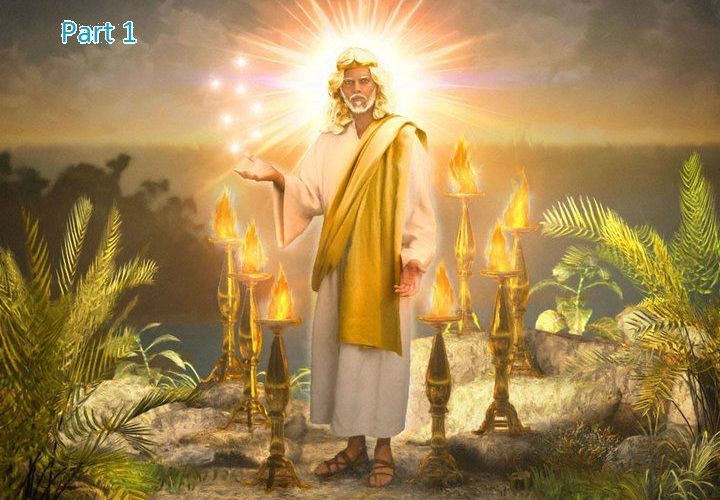
Revelation 2:1 – To the angel of the church in Ephesus write: “The words of Him who holds the seven stars in His right hand, who walks among the seven golden lampstands.”

CHRIST THE SOVEREIGN JUDGE: The Glorified Christ is shown here to be holding the seven stars or angels of the seven churches, as well as He walks amongst the seven golden lampstands which are the churches themselves. This to me means Christ Himself has toured the churches first hand and is fully prepared to comment upon their state and what He thinks needs to be done in each to correct any issues that are found. The holding of the stars means that not only that He has authority over the churches, but they are in fact sanctioned to exist under His blessing. So those within it have stated they wish to be a child of Christ and have bowed before Him and asked Him into their lives.

Revelation 2:2-3 – “I know your works, your toil and your patient endurance, and how you cannot bear with those who are evil, but have tested those who call themselves apostles and are not, and found them to be false. I know you are enduring patiently and bearing up for my name’s sake, and you have not grown weary.

COMMENDATION: Christ has seen that those in Ephesus have been diligent in their faith and have even tested those that paraded themselves to be messengers of Christ, but were found to be false. So here Jesus finds things happening within this church that please Him and so it states has such.

Revelation 2:4-5 – “But I have this against you, that you have abandoned the love you had at first. Remember therefore from where you have fallen; repent, and do the works you did at first. If not, I will come to you and remove your lampstand from its place, unless you repent.”

INDICTMENT: The word “love” used here is “Agapen” is the deepest most meaningful type of love and because they have fallen from this first love they were seen by Christ Himself as of having a major problem because he used the word “repent” meaning to turn around, do a 180.
When Christ walked amongst us He added two commandments to the ten we already had. The first and most important of these was to Love God with all our heart, mind and soul. To love God with the human trinity to show love to the Holy Trinity. To love God though His the Son the Lord Jesus Christ so completely means we are to place God first and foremost in all that we do. Every single action that we do must be done thinking of: “How would Jesus do this?” “How would God want me to do this?” Every single action we do in our lives and every single day of our lives.
These were teaches that this church knew for the gospels had been in their possession at this time, and they had heard these very words spoken of from within them.
This re-emphasizes just how important it is to live like an image of Christ 365 days a year not just on Sunday or when it is convenient. For Christ Himself says to “repent” for they had strayed away from their love for Christ. Their hearts had cooled for God and thus opened the door for a falling away and due to this falling away Jesus threatened to remove their lampstand. The lampstand was removed in 431 when the last inhabitants of Ephesus were forcibly removed by the Turks.

Revelation 2:6 – “Yet this you have: you hate the works of the Nicolaitans, which I also hate.”

Who the “Nicolaitans” were no one knows. The mere fact that any true history of them has ceased to exist shows just how much Jesus Christ despised them, for all we have left of them is a meager mention of their name twice in this book and both times it is not in a flattering light.

Revelation 2:7 – “He who has an ear, let him hear what the Spirit says to the churches. To the one who conquers I will grant at eat of the tree of life, which is in the paradise of God.”

Here we see that not all will hear the words and understand them and that this message is given through the Holy Spirit. Those that do hear and overcome are promised to eat of the “tree of life,” in other word granted eternal life in the service of God.
Here we see how as a church as a whole at the end of the first century was starting to drift away from Christ. For they had not seen Him. They did not know Him as a person, but a tale told to them by their elders. This is true now as well in many. They see God and Jesus as a story, a fairy tale. Not realizing Jesus was real and there is evidence that still exists that say yes Jesus is real and what He did was real as will and what He offers to all is just as real.

The Seven Churches (Part 1)


re-post
This last week I started restudying the book of Revelation. To do this I decided this time as I did with the Book of Daniel to use a commentary to gain a better insight into the word of God. Now I have tried more than one and found only one to be really of any true worth.
The Walvoord Commentary series is what I would recommend. In most areas with them I have had little conflict with what was represented. I did find that Dr. John F. Walvoord, or the editors, since he has gone on to be with Christ, that he is anti-Catholic, but he gives a good argument for this in one of the churches to be discussed. I also found him to be pro-Baptist, which I actually feel is not a good thing. He had the belief of “once saved always saved.” This, I personally believe, has become an open door to apathy thus helping to create the state of the falling away from God we are now experiencing in Christianity today.
Now it is important to get a grasp upon the most important element within the Bible, especially the New Testament. It was written for those that have already become true followers of Jesus Christ. It is for those that have fallen to their knees and bowed before Him and asked Him into their hearts. It is a guide book into striving to become a true reflection of our Savior. So when John is writing these letters to the seven churches it is to those that committed within their hearts to truly be Christian. Now most in this world say they are Christian, because they have gone to church when they were young in most cases, but they never truly surrender their lives to following the Son of God. This is apathy, this is a sin. This is why people have such a hard time understanding the Bible, let alone striving to follow it teachings. They think they are Christian, but in reality they aren’t. This has occurred not only due to Catholicism, but also due to Baptist teaching, both of which are man-made doctrines and not given by God through His Son the Lord Jesus Christ.
Jesus gave us the true baptism which occurs after you commit your heart and soul to Christ, something that is impossible for a baby to do. Christ gave us the taking of unleavened bread a simple of His body and of wine the symbol of His blood. These are the only ceremonies given to the Church. He also taught that those that have been saved can fall away from their salvation due to freewill. Christ Himself made this clear in John 15. It is reinforced in 2 Peter 2 as well as in two of the letters going to be discussed in this series. For these letters were given to the “messengers” of the seven churches and so as Christ says at the end to every church “He that hath an ear, let him hear…”
Here is an important element that the Walvoord Commentary brought to light to me that when thought upon actually makes sense. The state of the churches even though contemporary for they can exist as contemporaries in other churches that now exist. However, this is what I found enlightening is that the state of the churches are also linear. Meaning they follow one after the other throughout the church age. The first church being the church at the time the letters are written to the last church being the state of the church as a whole is at the time when it is near the end of times or the time for what is stated within Revelation to actually take place.

How scientist discount God, but how science proves He is.


This is not going to be a thesis paper with supporting documentation. It is simply one man’s observation of the facts presented to the world.
For example: The big bang.
This to me is one of the ultimate proves of God. An explosion of mass at a central location that radiates outward and results in a huge universe of billions of galaxies with millions of stars within each. Sure sounds like creation to me.
Now look at the behemoth in Job. A tail upon the creature is described as being like a Lebanon cedar. For the longest time many could not say that, this “behemoth” was in fact a dinosaur since for years they had tails from dinosaurs dragging the ground. Then scientist figured out that their tails actually went straight back and looks like the trunk of a cedar tree, long straight and tappers to a point. Moreover, Lebanon cedars were huge, used as pillars and masts. So again, science confirms the Bible and thus confirms God. Just think on that for a bit.

The prodigal child, a deep dive into some parables from Jesus Christ (part five)


The eldest son
There is many facets to the eldest son that can be addressed here as he is a reflection of those that have been loyal to God all the time. The religious leaders that were here listening to Jesus tell this parable is one facet. Those within churches that see people come into their churches that look and act different then they do. These are just two facets.
The religious leaders saw Jesus Christ as a threat to their command of the Israeli people. Thus their anger and hatred toward Him. The fact that Christ was causing people to come to God as they never did with those in religious power. That sinners would go to Him and then leave from Him no longer sinning thus becoming the younger son. Being dead and now alive once again. The religious leaders in their own minds saw themselves as being loyal to God, even though there was mounting evidence that this was the furthest thing from the truth.
In many churches today people form a group and see those that come into their churches as invaders. So they make it hard for these intruders to fit in or grow in their belief in Jesus Christ and His Father.
These are all aspects of the eldest son.
What the father says is clear and to the point.
Luke 15:31 – “His father said to him, ‘Look, dear son, you have always stayed by me, and everything I have is yours. 32 We had to celebrate this happy day. For your brother was dead and has come back to life! He was lost, but now he is found!’”
Simply there is no need to be jealous or envious. For you are a part of the body of Christ, and when someone comes to realize that truth. That God is the Creator of ALL. That they have come home through accepting Jesus as their Savior is a time of joy and celebration. For they were dead and now they are alive and will for all eternity.
This is something that is open to all that are willing to see the truth. Be they now Atheist, Muslim, Buddhist, or even think they are Christian. All they need do is not live their lives in the here and the now, but to look to the eternal life that is yet to come. To stop living in the temporal and plan to exist for billions upon billions of years in the embrace of God, through His Son Jesus Christ our Savior.

The prodigal child, a deep dive into some parables from Jesus Christ (part four)


The epiphany.
As he feeds the pigs desiring to eat the food of what the Jewish people see as an unclear animal. Realization hits him.
Luke 15:17 – And when he came to himself, he said, How many hired servants of my father’s have bread enough and to spare, and I perish with hunger!
Now we have to note how things are different between his life now and those that are servants to his father. As was pointed out in the previous part of this series he had made himself a bondservant. In essence a slave for six years. His master was not feeding him. His father on the other hand had free people working for him. In fact his father paid them. This is shown in the word “hired” and by the fact that they have enough money to be able to give bread to those in need. As shown by the wording: “have bread enough and to spare.”
Hired servant – misthios – a paid worker, hired servant, hireling (contrasted with a slave).
The implication in the next few verses implies that he came to realize that if he stayed a bondservant he would die of starvation. So he leaves his situation.
Now here we must come to another realization within the younger son. At the beginning of this parable he is prideful and arrogant. For he went to his father and demanded his inheritance. Now in the pit of despair and starvation a new man arises. A man that is humbled. He says this:
“Father, I have sinned against both heaven and you, and I am no longer worthy of being called your son. Please take me on as a hired servant.”
Not only does he see his actions as wrong, but an actual sin. He also realizes that his actions were so shameful that he can no longer consider himself as a child of his father. His humility only begs of him to seek after being a servant of this man who is his father.
So he heads home. As he comes into sight of home. His father sees him coming towards him. Even though he is a ways off his father knows it is him. He recognizes him. At seeing him. The bible says this:
Luke 15:20 – And he arose, and came to his father. But when he was yet a great way off, his father saw him, and had compassion, and ran, and fell on his neck, and kissed him.
Compassion – splagchnizomai – I feel compassion, have pity on, am moved.
Pity – sympathy and understanding for someone else’s suffering or troubles
The father understood what had transpired. He did not hate him, nor despise him. In fact he ran to him and fell upon him hugging him tightly and kissed him. This is how God sees all that come humbly toward Him seeking His forgiveness. God loves all of humanity. All that is required by us that are his children, is to acknowledge Him. To say we have sinned, and then to go to Him. He will then run to us as well. Embracing us, holding us to Him. For we acknowledge that He is not only our God, our Creator, but our Father as well.
The sins are already forgiven, just because we turn to God and go to Him. This is seen in the very next two verses. The son begins to make His speech he had planned, but before he can even ask to be only accepted as one of his father’s servants. His father shouts out to his servants, to place the best robes upon him, and a ring upon his finger, and shoes upon his feet. Then the father also says to kill the fatted calf and to eat and celebrate.
Luke 15:24 – For this my son was dead, and is alive again; he was lost, and is found. And they began to be merry.
This same joy is promised to all of humanity that comes to accept Jesus Christ as their Savior, for only through Him can God see them approaching His throne, and all of heaven will celebrate as they come to accept that God is their eternal Father.

The prodigal child, a deep dive into some parables from Jesus Christ (part three)


We left the previous part of the series with the youngest son’s demand for his reward. Now we will look to the reward itself.
So, the child is given their inheritance. Again we need to understand something. What he asks for is what is promised in the future, once his father passes from the world. So the prodigal child is asking for in essence their rewards promised them in the eternal life that is yet to be, if we look at the father as God. This is what he asks for and this is what he is given. The same can be said of all that ask God of something. This something, be it wealth, a fancy home, a fancy car. All this is something that was meant for a life they have yet to see. The eternal life. These things you seek after here are not for eternity, but for here, for now, in the contemporary. Yet this is what most demand. This is what the son was asking for.
So the youngest son packs up everything he owns and moves to a distant land. The intent is made clear he turns his back upon his father. Never to see him ever again. Most that deny God live this very way. Many that say they accept Christ as their Savior live this was as well. It is something to be expected as is made clear in 2 Peter chapter 2:
20 – And when people escape from the wickedness of the world by knowing our Lord and Savior Jesus Christ and then get tangled up and enslaved by sin again, they are worse off than before. 21 It would be better if they had never known the way to righteousness than to know it and then reject the command they were given to live a holy life. 22 They prove the truth of this proverb: “A dog returns to its vomit.” And another says, “A washed pig returns to the mud.”
Most do not wish to live a Christian live-style. They find it confining, restricted. They see the Bible as simply a reference tool. A book of suggestions, instead of what it truly is. It is a book of laws that we are required to follow.
John 14:15 “If you love me, obey my commandments….”
This is why most run away from God. This is why they pack all their belongings so they can do as the youngest son did. To live a “riotous living,” away from the site of God their Father and Creator.
Riotous – asotos – extravagantly wasteful because of “loose living,” i.e. a debauched, profligate lifestyle
Profligate – utterly and shamelessly immoral or dissipated; thoroughly dissolute.
As he lived this live-style he wasted all he owned. Then when a famine hit the land he found himself without the ability to even feed himself. So he bonded himself to someone in the land he now lived.
What he made of himself voluntarily was a bondservant. A bondservant is something that was established within the Israelite tribes as a way to settle debts. Simply the person become the property of someone else for a period of time. A slave. In most cases for six years. So being a slave, his master did not even feed him, and he hungered even after the scraps that he was feeding unto the pigs he was ordered to feed.
Here is something else that needs to be understood. The pig is seen as an animal that is detestable, filthy and unclean to the Israelites. To be forced to feed one let alone desire to eat what a pig eats means that the youngest hit rock-bottom.
We will continue this in the next part of the series.

The prodigal child, a deep dive into some parables from Jesus Christ (part two)


Yesterday we began to look into the parables Jesus gave one day, nearly two thousand years ago. We discussed the first two parables in part one of this series. Now we will continue our deep dive as we go onto the parable of the prodigal son:
Luke 15:11 – To illustrate the point further, Jesus told them this story: “A man had two sons. 12 The younger son told his father, ‘I want my share of your estate now before you die.’ So his father agreed to divide his wealth between his sons. 13 “A few days later this younger son packed all his belongings and moved to a distant land, and there he wasted all his money in wild living. 14 About the time his money ran out, a great famine swept over the land, and he began to starve. 15 He persuaded a local farmer to hire him, and the man sent him into his fields to feed the pigs. 16 The young man became so hungry that even the pods he was feeding the pigs looked good to him. But no one gave him anything. 17 “When he finally came to his senses, he said to himself, ‘At home even the hired servants have food enough to spare, and here I am dying of hunger! 18 I will go home to my father and say, “Father, I have sinned against both heaven and you, 19 and I am no longer worthy of being called your son. Please take me on as a hired servant.”’ 20 “So he returned home to his father. And while he was still a long way off, his father saw him coming. Filled with love and compassion, he ran to his son, embraced him, and kissed him. 21 His son said to him, ‘Father, I have sinned against both heaven and you, and I am no longer worthy of being called your son.’ 22 “But his father said to the servants, ‘Quick! Bring the finest robe in the house and put it on him. Get a ring for his finger and sandals for his feet. 23 And kill the calf we have been fattening. We must celebrate with a feast, 24 for this son of mine was dead and has now returned to life. He was lost, but now he is found.’ So the party began. 25 “Meanwhile, the older son was in the fields working. When he returned home, he heard music and dancing in the house, 26 and he asked one of the servants what was going on. 27 ‘Your brother is back,’ he was told, ‘and your father has killed the fattened calf. We are celebrating because of his safe return.’ 28 “The older brother was angry and wouldn’t go in. His father came out and begged him, 29 but he replied, ‘All these years I’ve slaved for you and never once refused to do a single thing you told me to. And in all that time you never gave me even one young goat for a feast with my friends. 30 Yet when this son of yours comes back after squandering your money on prostitutes, you celebrate by killing the fattened calf!’ 31 “His father said to him, ‘Look, dear son, you have always stayed by me, and everything I have is yours. 32 We had to celebrate this happy day. For your brother was dead and has come back to life! He was lost, but now he is found!’”
Let’s look at this parable in more detail. Our first stop in this deep dive. The demands of the younger son, which is where we will start. For the son went to the father and did not ask, but told his father. In the KJV it is “said,” but still it was not “asked his father.”
There is a couple of ways to approach just this one sentence. From the main standpoint of this particular teaching we should look at it this way. All of humanity are the children of God. The mere denial of accepting God not only as “God,” but as their creator and Father is a type of demand. That they are their own person. That they are in control and have full say-so in how they wish to live their lives. You see this in most that deny the very existence of God. However, in the other way you can look at it. It is the way those that have asked Christ to be their Savior behave as well. Many still choosing to be the ones in control of their own lives and see the Bible more as a book of suggestions instead of actual laws that demand requirements to be maintained and followed. These two aspects that tie right back into the previous two parables that Jesus had just spoken.
Here is another facet that must be noted. The demand for his rewards now. Again we come to those that are like the lost coin and the lost sheep. In both examples those that turn away from God and His Son seek after their rewards here in this temporal realm we all now exists within.
Matthew 6:19 “Don’t store up treasures here on earth, where moths eat them and rust destroys them, and where thieves break in and steal. 20 Store your treasures in heaven, where moths and rust cannot destroy, and thieves do not break in and steal. 21 Wherever your treasure is, there the desires of your heart will also be.
How does the father, God, respond to His child’s demands? Without question or debate, the father gave to the child what he demanded. This too is how God responses to all His children, which is all of humanity, be they Christian, Muslim, Buddhist, or whatever religion they follow. God loves all His children, but He knows that if their heart is hardened unto the truth there is no way to reach them and cause them to accept Him as who He really is.
This is one reason He has made a type of loophole in the Great White Throne Judgment, for those that have led a righteous life. But this loophole is not a guarantee of eternal life. There is only one way, and that is through the acceptance of Jesus Christ as your personal Savior. God wishes all to come into the eternal life we are all promised. However, he knows that due to free-will most will reject the truth, for all of humanity due to the actions of Adam and Eve, is sinful and the source of their own corruption.
Mark 7:20 – And then he added, “It is what comes from inside that defiles you. 21 For from within, out of a person’s heart, come evil thoughts, sexual immorality, theft, murder, 22 adultery, greed, wickedness, deceit, lustful desires, envy, slander, pride, and foolishness. 23 All these vile things come from within; they are what defile you.”
This also goes directly into why Jesus was telling this parable. For it was the desires of the child that drove him to want his inheritance. We will continue this in the next part of this series.

The prodigal child, a deep dive into some parables from Jesus Christ (part one)


Very quickly Luke sets the stage for the parables Jesus is about to say to those gathered about Him this day. Amongst them are His earthly rivals, the holy men of the Israelites. They scoff that once again Christ has brought sinners before Him.
Jesus goes right to this point immediately:
Luke 15:4 – “If a man has a hundred sheep and one of them gets lost, what will he do? Won’t he leave the ninety-nine others in the wilderness and go to search for the one that is lost until he finds it? 5 And when he has found it, he will joyfully carry it home on his shoulders. 6 When he arrives, he will call together his friends and neighbors, saying, ‘Rejoice with me because I have found my lost sheep.’ 7 In the same way, there is more joy in heaven over one lost sinner who repents and returns to God than over ninety-nine others who are righteous and haven’t strayed away! 8 “Or suppose a woman has ten silver coins and loses one. Won’t she light a lamp and sweep the entire house and search carefully until she finds it? 9 And when she finds it, she will call in her friends and neighbors and say, ‘Rejoice with me because I have found my lost coin.’ 10 In the same way, there is joy in the presence of God’s angels when even one sinner repents.”‬‬
In these two parables He says the same thing, for the most part, but in a way that not only both male and females can relate too, but those that live in the country and those that live in the cities. Instantly destroying the religious leaders’ argument and show to those that understand how foolish those that hold onto man-made dogmas really are.
But let’s now look into the parables. Both deal with the property of a person that losses one part of it. It shows how they search and look for it. Jesus then says what the heavenly equivalent is. This statement of joy for just one person that repents is key of these parables.
We need to understand two key words. Sinner and repent.
Sinner – hamartolos – sinning, sinful, depraved, detestable
Repents – repenteth – metanoeo – from metá, “changed after being with” and noiéō, “think”) – properly, “think differently after,” “after a change of mind”; to repent
So any that sin, that after coming to accept Jesus Christ as their Savior begins to think differently and uses the teachings within the Bible to know what is the difference between right acting and wrong acting. Then once realizing these differences end those things within their lives that are called sin, no matter how painful that turning away from these actions could be.
The slight differences between the first and the second though is the former is aimed at someone who had already asked Jesus Christ to be their Savior. While the latter was aimed at any who come to decide to follow Jesus and ask Him to be their Savior. In both cases acknowledging that there is sin in their lives and then turning away from the sin is what is required by both. So even though Jesus is addressing two different type of sinners. The first, someone who was once a part of the vine, the other someone newly grafted into vine, which is Jesus Christ.
These two parables are fixed directly at the ridicule made by those religious leaders present at this particular teaching being made by Christ on that day nearly two thousand years ago. In the next part of this series we will take a deeper look into the parable of the prodigal son.

Context, context, context


This is one of the most misunderstood elements of coming to know the teachings within the Bible.
Here is a prime example. An atheist Jew once confronted me one time due to the fact that I was Christian. Over and over again she would spout out “Go sell all your possessions and give the money to the poor!” She was stuck on this like listened to a scratched vinyl record. In her mind all Christians were hypocrites and liars because they had not sold all their property and were living in poverty.
In some aspect she was correct. However to be fixated upon this one line from the Bible taken totally out of context, is something that not only is a problem with those like this lady that have no knowledge of the Bible. It is also to those that state they are Christian, but do not follow the teachings that are within this Holy Book.
Now just for clarification. This verse she was referring to had to do with the young rich man. (Matthew 19:16-22, Mark 10:17-31, Luke 18-23)
Mark 10:17 – As Jesus was starting out on his way to Jerusalem, a man came running up to him, knelt down, and asked, “Good Teacher, what must I do to inherit eternal life?” 18 “Why do you call me good?” Jesus asked. “Only God is truly good. 19 But to answer your question, you know the commandments: ‘You must not murder. You must not commit adultery. You must not steal. You must not testify falsely. You must not cheat anyone. Honor your father and mother.’” 20 “Teacher,” the man replied, “I’ve obeyed all these commandments since I was young.” 21 Looking at the man, Jesus felt genuine love for him. “There is still one thing you haven’t done,” he told him. “Go and sell all your possessions and give the money to the poor, and you will have treasure in heaven. Then come, follow me.” 22 At this the man’s face fell, and he went away sad, for he had many possessions. 23 Jesus looked around and said to his disciples, “How hard it is for the rich to enter the Kingdom of God!” 24 This amazed them. But Jesus said again, “Dear children, it is very hard to enter the Kingdom of God. 25 In fact, it is easier for a camel to go through the eye of a needle than for a rich person to enter the Kingdom of God!” 26 The disciples were astounded. “Then who in the world can be saved?” they asked. 27 Jesus looked at them intently and said, “Humanly speaking, it is impossible. But not with God. Everything is possible with God.” 28 Then Peter began to speak up. “We’ve given up everything to follow you,” he said. 29 “Yes,” Jesus replied, “and I assure you that everyone who has given up house or brothers or sisters or mother or father or children or property, for my sake and for the Good News, 30 will receive now in return a hundred times as many houses, brothers, sisters, mothers, children, and property—along with persecution. And in the world to come that person will have eternal life. 31 But many who are the greatest now will be least important then, and those who seem least important now will be the greatest then.”
You can see that when taken in context it is not a statement for all that call themselves “Christian” to go and sell all their possessions. It is showing that those that cherish the riches of this life over the eternal reward that is to come when we enter into the next life. That those who cling to wealth here in this temporal time have their reward, and that it is hard for someone with wealth to enter into heaven. That is why more than once the Bible says you cannot worship God and money. It must be one or the other.
Does this mean that those with money cannot get into heaven? That is a complicated question believe it or not. That is why I said to a degree the woman was correct. Those who are rich and buy multiple homes, travel extensively and in turn do not share their wealth to those in need, are worshiping money and not God. Even if they profess to be “Christian,” then their odds of entering heaven decreases.
This is just one example of knowing the context of the Bible. There are many other things that come out daily that are not in context. Most of these out of context statements come from those that wish to deceive and lead those that are unknowing down a path to destruction.
A very recent example was done by the Democratic Party Presidential Candidate. She said:
“The greatest commandment is to love.”
This is a lie, this is false. This is not only out of context but an outright lie. I will show the following verse first. Then I will show what the greatest commandment is.
Galatians 1:6 – I am shocked that you are turning away so soon from God, who called you to himself through the loving mercy of Christ. You are following a different way that pretends to be the Good News 7 but is not the Good News at all. You are being fooled by those who deliberately twist the truth concerning Christ. 8 Let God’s curse fall on anyone, including us or even an angel from heaven, who preaches a different kind of Good News than the one we preached to you. 9 I say again what we have said before: If anyone preaches any other Good News than the one you welcomed, let that person be cursed.
When someone changes the Bible for their own reward and glory they are cursed, destine to damnation and any that listen will join with them.
Now this is the Greatest Commandment of all:
Matthew 22:36 “Teacher, which is the most important commandment in the law of Moses?” 37 Jesus replied, “‘You must love the Lord your God with all your heart, all your soul, and all your mind.’ 38 This is the first and greatest commandment.
So you see why it is important to know the Bible and to read it in context. You must stay in context and you must not change it, remove from it or add to it. For when you take it out of context you run the change of falling into this curse. A curse that will not lead to God but to the pit of fire and eternal damnation.